
 Image 1 of 1
This is a clear, practical safety briefing script designed to be read out loud before every departure. It walks your crew through the essentials in plain language so everyone knows where things are, what to do in an emergency, and what you expect from them — before you cast off.
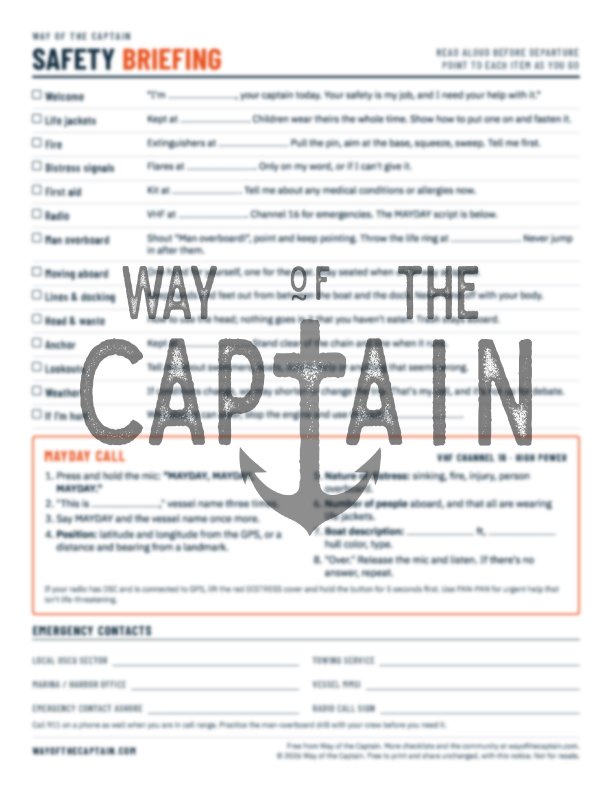
A professionally designed, single-page PDF ready to print and use immediately. It includes:
Guided briefing script covering welcome, life jackets, fire extinguishers, distress signals, first aid, VHF radio, man overboard, moving aboard, docking safety, head and waste, anchor, lookouts, weather decisions, and who takes over if the captain is injured
Fill-in blanks so you can note exact locations of life jackets, extinguishers, flares, first aid kit, radio, life ring, and anchor
MAYDAY call script with the full step-by-step procedure for VHF Channel 16 (plus DSC distress button reminder and when to use PAN-PAN)
Emergency contacts section for local USCG sector, towing service, marina/harbor office, vessel MMSI, radio call sign, and shore contact
Clear checkboxes so you can confirm each topic has been covered
Designed to be pointed at and read aloud — not just handed out
One page, no fluff — meant to be used before every trip
Plain language your guests and crew will actually understand
Covers the critical items that prevent confusion when something goes wrong
Includes the official-style MAYDAY format so you’re not trying to remember it under pressure
Instant digital download — print as many copies as you need
Recreational sail and power boaters who take guests or crew and want a simple, repeatable way to brief them properly. Ideal for captains who want their passengers to know where the life jackets are, how to call for help, and what to do in a man-overboard situation — without winging it every time.
Way of the Captain checklists are planning aids. They don't replace USCG regulations, state law, or your own judgment. Requirements vary by vessel size, type and waters.
Instant download. Print and brief your crew today..