
How to give a guest safety briefing that people actually remember
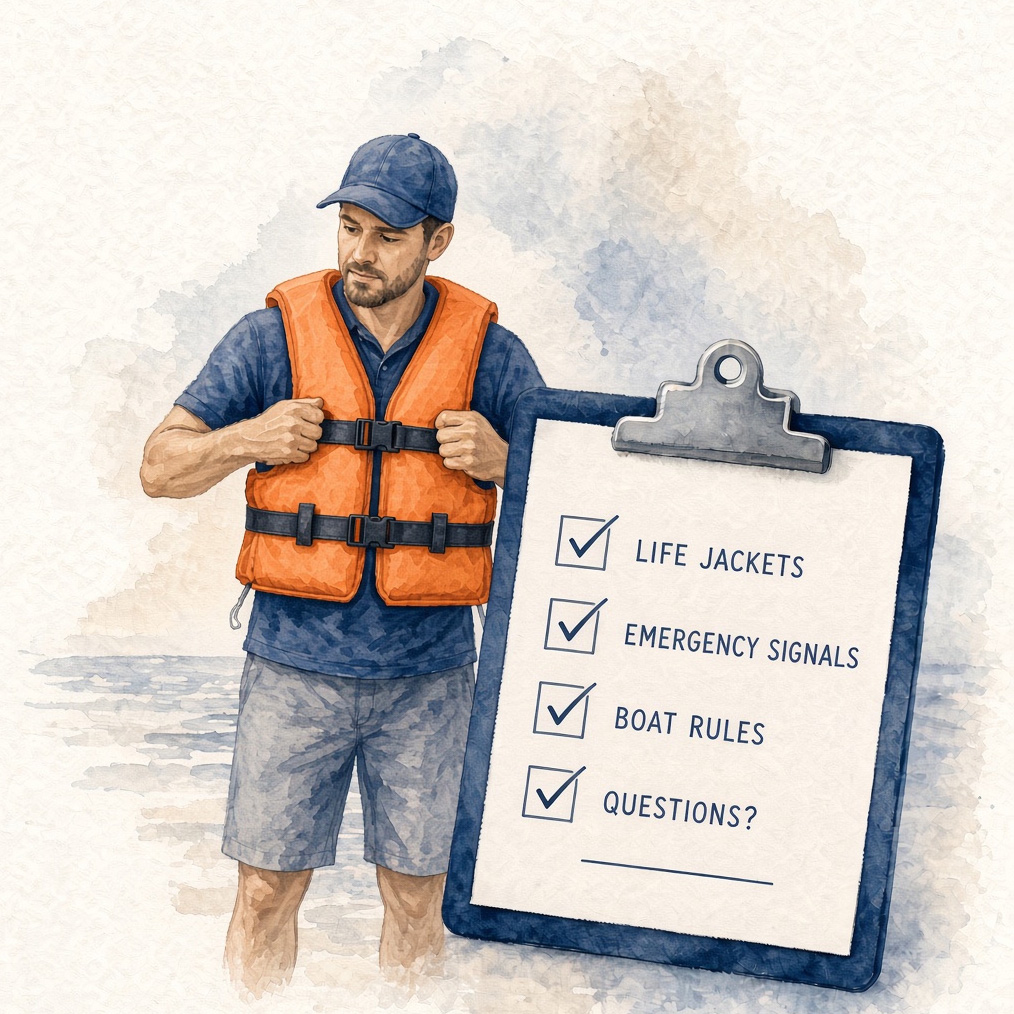
Every captain knows the briefing matters. Fewer of us give a good one every time. Guests are excited, the cooler needs stowing and the tide won't wait. Here's a simple routine that takes about five minutes.
Do it before the lines come off
Give the briefing at the dock, engine off, with everyone aboard and listening. Once you're underway, wind and engine noise make it hard to hear, and people are looking at the view, not at you.
Point, don't just talk
Don't say "the life jackets are below." Walk people to them, open the locker and hold one up. Show where the fire extinguisher, first aid kit and flares live. People remember what they've seen and touched.
Cover the essentials
- Life jackets: where they are, how to put one on, and that children wear theirs the whole time.
- Fire: where the extinguishers are and how to use one (pull, aim, squeeze, sweep).
- Man overboard: shout, point and keep pointing. Throw something that floats. Never jump in after them.
- The radio: where it is, and that channel 16 is for emergencies.
- Moving aboard: one hand for yourself, one for the boat. Keep hands and feet clear when docking.
- If the captain is hurt: show at least one other person how to stop the engine and call for help.
Make someone your second
Pick one guest to be your backup. Show them how to kill the engine, use the radio and read your position from the GPS. If you go over the side, they're the one who gets the boat back to you.
Use a script
A written briefing means you won't skip anything when you're distracted. Our free Guest Safety Briefing is one page you can fill in for your boat and read aloud, with the MAYDAY call and an emergency contacts panel on the same sheet.
A good briefing isn't about scaring your guests. It's about making sure that if something does go wrong, everyone aboard knows what to do.
This article is general guidance. Charter and passenger vessels may have specific briefing requirements; check the rules that apply to your vessel.